
Your Most Important Love Story
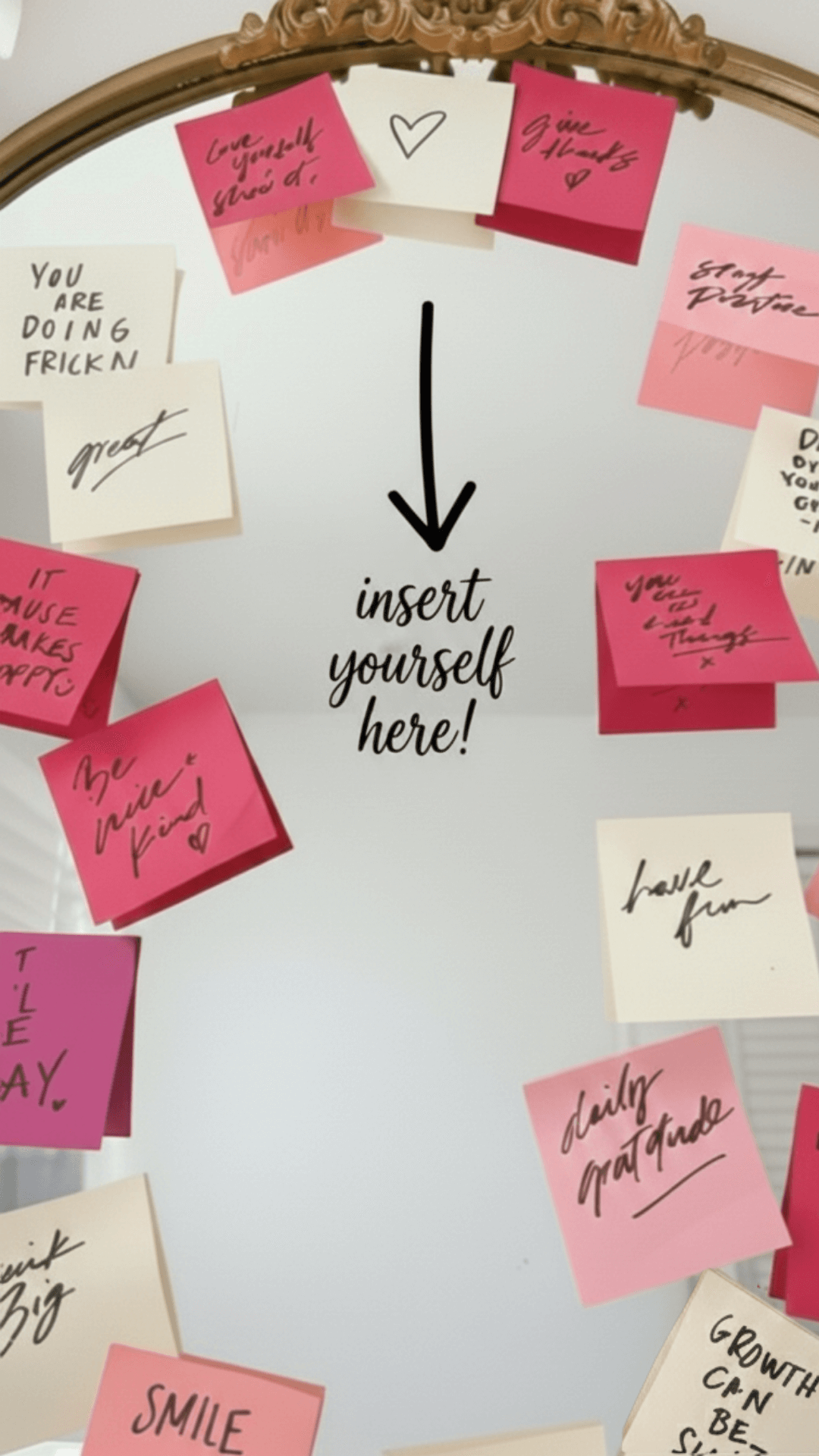
The Valentine’s Day cards don’t mention this, but the most important relationship in your life isn’t with your partner, your kids, or your best friend.
It’s with yourself.
And if you’re like most women and underrepresented leaders I know—especially those of us who’ve built careers in white, male-dominated industries—that relationship is probably pretty rocky.
The Self-Love Switch
When people talk about self-love, they usually mean self-care. Spa days. Meditation apps. Sunday morning yoga classes.
And look, I’m not against any of that. Taking care of your body and mind matters. But conflating self-care with self-love is like confusing a band-aid with surgery: one is a temporary fix, the other is foundational repair.
Self-love isn’t what you do. It’s what you believe about who you are.
It’s the bone-deep conviction that you have worth—not because you’re productive, useful, or make other people’s lives easier, but simply because you exist.
Most of us don’t believe that. Not really.
We believe we have conditional worth. We’re valuable if we’re high-performing, agreeable, giving, not too much trouble. We’ve internalized a transactional view of our own humanity: I matter if I produce. I’m worthy if I serve.
That’s not love. That’s employment.
What Happens When You Don’t Love Yourself
I didn’t recognize how little I loved myself until I started paying attention to my choices.
I noticed I apologized constantly—for asking questions, for taking up time in meetings, for having needs. I negotiated every job offer from a place of gratitude rather than leverage, grateful someone wanted me rather than confident in what I brought to the table. I accepted working conditions that slowly eroded my health because I didn’t want to seem difficult.
When you don’t love yourself, you make yourself smaller to fit into spaces that were never designed for you. You tolerate mistreatment because you’re not sure you deserve better. You work yourself into the ground trying to prove your worth to people who will never see it.
The costs accumulate. Burnout. Resentment. A persistent feeling that no matter what you achieve, it’s never quite enough.
I’ve watched brilliant women stay in toxic jobs because they convinced themselves no one else would hire them. I’ve seen leaders work through serious illness because they didn’t want to let anyone down. I’ve known people who negotiated their own salaries down because they felt uncomfortable asking for what they were worth.
This isn’t humility. It’s self-abandonment.
The Question You’re Probably Asking
Every time I talk about self-love, someone worries: “But won’t that make me selfish?”
And I get it. We’ve been taught that caring for ourselves comes at someone else’s expense. That if we’re not constantly giving, we’re taking. That putting ourselves first makes us bad people.
But there’s a difference between self-love and selfishness.
Selfishness is taking more than your share at others’ expense. Self-love is claiming what’s rightfully yours.
Selfishness disregards others’ needs entirely. Self-love acknowledges that your needs matter too—not more than others’, but also not less.
Selfishness is rooted in entitlement. Self-love is rooted in recognizing your inherent worth.
The women who worry about becoming selfish are usually the ones who’ve spent their entire lives being told they’re too much. Too loud. Too ambitious. Too demanding. They’ve been punished for taking up space, so they’ve learned to shrink. The idea of expanding again—of believing they deserve care and consideration—feels dangerous.
But you can’t love others well if you don’t love yourself. You can perform care. You can go through the motions. But genuine love—the kind that’s sustainable, that doesn’t breed resentment—requires that you see yourself as equally worthy of it.
Self-Love Is Political
When I first started talking about self-love in professional settings, people seemed uncomfortable. It felt too personal, too soft, too unrelated to the work of building companies and leading teams.
But self-love is deeply political, especially for women from marginalized communities.
Systems of oppression rely on our willingness to accept less. They depend on us believing we should be grateful for scraps. They count on us not advocating for ourselves because we’ve internalized the message that asking for more is ungrateful, aggressive, difficult.
When a woman of color walks into a salary negotiation believing she is inherently valuable, that’s a threat to a system designed to underpay her. When she sets a boundary with a boss who expects unlimited availability, she’s disrupting a culture built on her exploitation. When she refuses to shrink to make others comfortable, she’s challenging the social contract that says her comfort matters less.
Self-love isn’t just personal development. It’s resistance.
Every time you choose yourself, you’re modeling what’s possible for the next generation. Your daughters watch whether you advocate for yourself. Your mentees notice whether you apologize for having needs. Your colleagues see whether you accept treatment you wouldn’t tolerate for someone else.
You’re not just changing your own life. You’re shifting what’s acceptable for everyone watching.
What Self-Love Actually Requires
Self-love is harder than self-care because it demands you question everything you’ve been taught.
It requires you to:
- Reject inherited scripts. The voices telling you to be grateful, work harder, ask for less—those aren’t yours. They’re survival mechanisms you adopted to navigate spaces that weren’t built for you. Self-love means recognizing which beliefs actually serve you and which ones are just keeping you small.
- Tolerate other people’s disappointment. When you start loving yourself, you will disappoint people. You’ll say no to things you used to say yes to. You’ll set boundaries where there weren’t any before. You’ll ask for what you need instead of quietly going without. Some people will be upset. That’s not a reason to stop.
- Stop performing. So much of what we call professionalism is just performance. Acting like we have it all together. Pretending things don’t bother us. Minimizing our needs so we’re easier to manage. Self-love means showing up as you actually are, not as the version you think people want.
- Trust yourself. You’ve been told your entire life not to trust yourself. To second-guess your instincts, to doubt your perceptions, to defer to others’ judgment. Self-love means believing that you know what’s right for you.
- Choose yourself even when it’s uncomfortable. This is the hardest part. Choosing the job that pays better over the one that “looks good.” Leaving the relationship that doesn’t serve you. Walking away from opportunities that would drain you. Self-love isn’t always convenient.
The Practice
Self-love isn’t a destination; it’s a practice. Some days you’ll nail it. Other days you’ll fall back into old patterns of self-betrayal and people-pleasing.
That’s fine. Progress isn’t linear.
Start small. Notice one place where you’re currently betraying yourself. Maybe it’s the meeting you dread but always attend. Maybe it’s the relationship where you give far more than you receive. Maybe it’s the way you talk to yourself when you make a mistake.
Choose differently. Once. Then again. Then again.
Self-love is built in tiny moments of choosing yourself. Of honoring what you need even when it’s inconvenient. Of speaking kindly to yourself even when you fall short. Of protecting your energy like it’s the precious resource it is.
The Love You Deserve
You’ve spent your entire life in a relationship with yourself. You’ll spend the rest of your life that way too.
No one else is guaranteed to be there from beginning to end. Not your parents. Not your partner. Not your children. Just you.
So the question is: How do you want that relationship to be?
Do you want to spend the rest of your life with someone who criticizes you constantly? Who doubts your abilities? Who accepts mistreatment? Who never advocates for what they need?
Or do you want to spend it with someone who sees your worth? Who believes in your capacity? Who fights for what you deserve? Who treats you with the care and respect you’d give to anyone you love?
You get to choose.
And choosing to love yourself isn’t selfish. It’s not indulgent. It’s not optional.
It’s the foundation of everything else you’ll ever build.
So this February, while everyone’s buying flowers for other people, I want you to buy them for yourself. Not as a consolation prize. Not because no one else did. But because you deserve your own love, your own care, your own devotion.
You always have.
You just forgot for a while.
Now remember.